Psychiatrist vs Therapist: Which one do I need?


A psychiatrist or psychiatric PA can prescribe medication to help fix the chemical imbalance that leads to depression and anxiety. In the most basic terms, depression and anxiety stem from low levels of serotonin and other chemicals in your brain. Antidepressants prescribed by a psychiatrist or psychiatric PA work by increasing serotonin in the brain. After several weeks you should notice a significant improvement in your depression and/or anxiety. However, medication is not the only effective treatment nor should it be. It is important to recognize that stress is part of the cause of depression and anxiety.
A Psychiatrist’s Role in Your Treatment
A psychiatrist or psychiatric PA should spend time during your appointment counseling you on ways to better manage the symptoms of depression and anxiety. However the main role of a psychiatrist or psychiatric PA is medication management of depression and anxiety disorders. While this is an important component in your treatment, it should not be the only focus of your treatment.
Stress is Bad For Your Health
Learning how to cope with stress is a very important part of your recovery. Stress causes your body to release a hormone called cortisol which is hazardous to your health. When cortisol is released excessively from stress it can lower chemicals like serotonin in your brain. Low levels of serotonin have been known to induce depression and anxiety disorders. High levels of cortisol can have a negative effect on other parts of your body as well. It can increase your blood pressure and make the vessels in your heart less flexible which can cause heart disease. Stress can trigger pain disorders from general aches and pains to tension headaches from stiffness in your neck and shoulders. Stress has been known to play a negative role in most illnesses that plague society today and a therapist can teach you coping skills which minimize the impact of stress.
Do Psychiatrists Counsel Patients?
Due to managed health care psychiatrists very rarely serve the role of therapist. They are able to see more patients in a day for medication management and often times see as many as 20-30 patients a day. Since there are many qualified and capable therapists, psychiatrists do not often do hour long sessions with clients. Instead they refer their clients to a therapist. However due to their very busy schedules, many psychiatrists do not have the time to educate patients on how therapy works. Instead they refer the patient to a therapist in hopes that the patient will trust their judgement and follow their treatment recommendations. However, many patients do not want to invest the time and money to see a therapist each week until they understand how therapy is helpful.
What Kind of Psychiatrist is Best for You?
I have been treating depression and anxiety disorders since 2004. My many years of experience has led me to determine that my clients who work with a therapist stay healthy on less medication . While my background is psychiatry and I love practicing the art of medicine, my goal is to minimize the use of medication. My treatment plan for my clients includes making lifestyle changes and improving their emotional health. Furthermore, I find more fulfillment in my work if I see less clients in a day. I want to spend more time with each client and provide them with a more holistic treatment plan. I recommend you research your medical provider to determine their care philosophy.
What Kind of Therapist is Best for You?
I recommend you find a psychiatrist or psychiatric PA who has close ties to local therapists. Ideally your medical provider should offer good referrals both in their office and in the community. Working with a therapist who shares office space with your medical provider offers many advantages. However, a therapist in the community may better fit your needs. The important thing is to be knowledgeable about your treatment options. A good place to start is reading my article titled: Why is Therapy so Important?
The Importance of Therapy in the Treatment of Depression and Anxiety


Learning how to cope with stress is a very important part of your recovery from depression and anxiety. In fact, people who do not suffer from depression and anxiety will have better physical health if they cope with stress well. Stress is known to play a role in worsening your health. Therapy teaches you skills that allow you to more effectively cope with stress.
When you feel stressed the cells in your body are breaking down more easily. Your immune system is responsible for cleaning up the toxins that are released when cells die. Normally your immune system can keep up with cleaning out these toxins. However, when stress causes more cells to break down than usual your immune system becomes overloaded. As a result, your body’s tissues become inflamed as toxins float around in your blood stream and body tissues.
Stress and Your Genetics
As inflammation increases in your body you become less healthy. This could mean that you get the bug that is spreading through the community. It also could mean that your body is more likely to start to break down in your genetic problem areas. If high blood pressure runs in the family then you might start to see your blood pressure rising. Perhaps your family tree is dominated by diabetes . In that case, your insulin might become less effective and your blood sugar would start to rise. What if members in your family are known to struggle with depression and anxiety? If so, you may find yourself depressed and anxious when you are overwhelmed by stress. Regardless of your genetics, it is important for your health to learn to cope with stress. The good news is that you have many options when it comes to therapy.
Why is Good Emotional Health Important?
In order to live a happy life, you want to become as emotionally healthy as possible. People who are emotionally healthy do not react as much to the stress and chaos that is part of our everyday life. They are equipped to tolerate negative and distressing emotions. Emotionally healthy people recognize the importance of negative emotions and how they are vital in allowing you to fully appreciate positive emotions. They understand that they must be able to sit through bad emotions like misery and sadness in order to be able to fully connect to true happiness .
How Does Therapy Help?
Most people need the help of an expert in order to improve their emotional health. Therapy gives you the tools you need to cope with stress. It also helps you identify if your reactions to stress and conflict are helpful or hurtful to your emotional health. A good therapist will use many different modalities to help you learn about yourself and how you react to the world around.
Cognitive Behavioral Therapy
You may also want to consider cognitive behavioral therapy (CBT), which helps you recognize unhealthy thought patterns. When you struggle with depression and anxiety you often times do not recognize how distorted your thoughts have become. Unhealthy patterns like catastrophizing, self shaming, and predicting the worst outcome can become a bad habit. Recognizing and fixing these distorted thoughts will help you more effectively cope with stress and conflicts. Identifying your triggers and problem areas will be helpful as well.
Dialectical Behavioral Therapy
Dialectical behavioral therapy (DBT) teaches you how to cope with uncomfortable emotions. You learn how to identify stressful triggers and you learn to label your emotions. You also learn about the importance of mindfulness and how to tolerate negative emotions without becoming distressed.
A Tailor Made Treatment Plan
For these reasons and many others, I highly recommend that my patients invest an hour a week in therapy with a counselor and spend at least 10-15 minutes each day devoted to improving their emotional health. I like to take the time to discuss the different therapy options. Together we create a treatment plan that fits both their medical needs and their lifestyle.
A Combination of Treatment Modalities That Stimulate the Brain in Different Ways
It is my opinion that a combination of different types of therapy is most helpful. The variety allows patients to stay engaged, but also stimulates different parts of the brain. Furthermore, exploring different types of therapy allows patients to better determine their learning style.
Individual Therapy
Working with a counselor one on one will help you identify areas of your life where you need help and guidance. A good therapist helps you decrease negative feelings by teaching you how to cope. However a good therapist will also push you out of your comfort zone so that you can heal from some of the traumas of your past. They should also assign work for you to do on your own.
Group Therapy
Group therapy can be very helpful. You will learn coping skills and also find social support and acceptance from other people who are also struggling. Groups can be geared towards DBT, addictions, social skills, parenting skills, grief, recovering from trauma, etc. To find a group that can fit your needs I recommend searching Psychology Today.
Daily self help workbooks:
[amazon_link asins=’1572245131,1609184718,1572249544′ template=’ProductCarousel-WithoutHeader’ store=’amazon0dd30-20′ marketplace=’US’ link_id=’1dadced8-8cf7-11e7-87e2-8b2d57cccbf6′]
Mindfulness Meditation: Meditation Studio
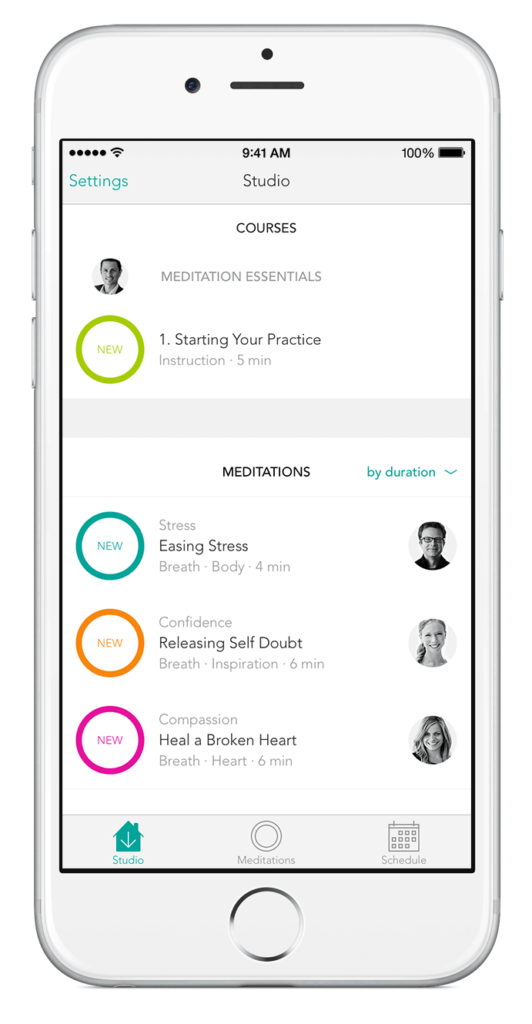
- Over 250 guided meditations
- Over 30 leading meditation experts
- Get unlimited access for a one-time fee
- Stay on track with session scheduling
- Get stress relief, sleep better, boost confidence & more with curated collections
- Learn the basics, find happiness & break habits with step-by-step courses
Click on the icon to download Apple IOS app:  Click on the icon to download Android app:
I hope you are able to find a path to good emotional health and remember this journey is not one you have to take alone. Utilize the trained professionals that can help you navigate the confusing mental health system. Take pride in making your emotional health a priority by seeking guidance from an expert. But please do not forget that stress does lead to medical illnesses and you may need to see a psychiatrist or psychiatric PA. Read my article titled: I See a Psychiatrist, Why do I Need a Therapist? to find out more.
The ADHD Less is More Challenge: Take the Stress out of Parenting a Child with ADHD
As a mother of 2 children with ADHD I am constantly battling the clutter they leave behind as they tear through the house. Piles of junk cumulate in the corners of their bedrooms. Abandoned toys gather in every room of the house. Missing socks find themselves under bookshelves, beds, and couches. Hoards of plastic children’s cups hold meetings on bedside tables, kitchen counters, and coffee tables throughout the house. Sharp edges of tiny lego pieces are found embedded in the bottom of my foot…
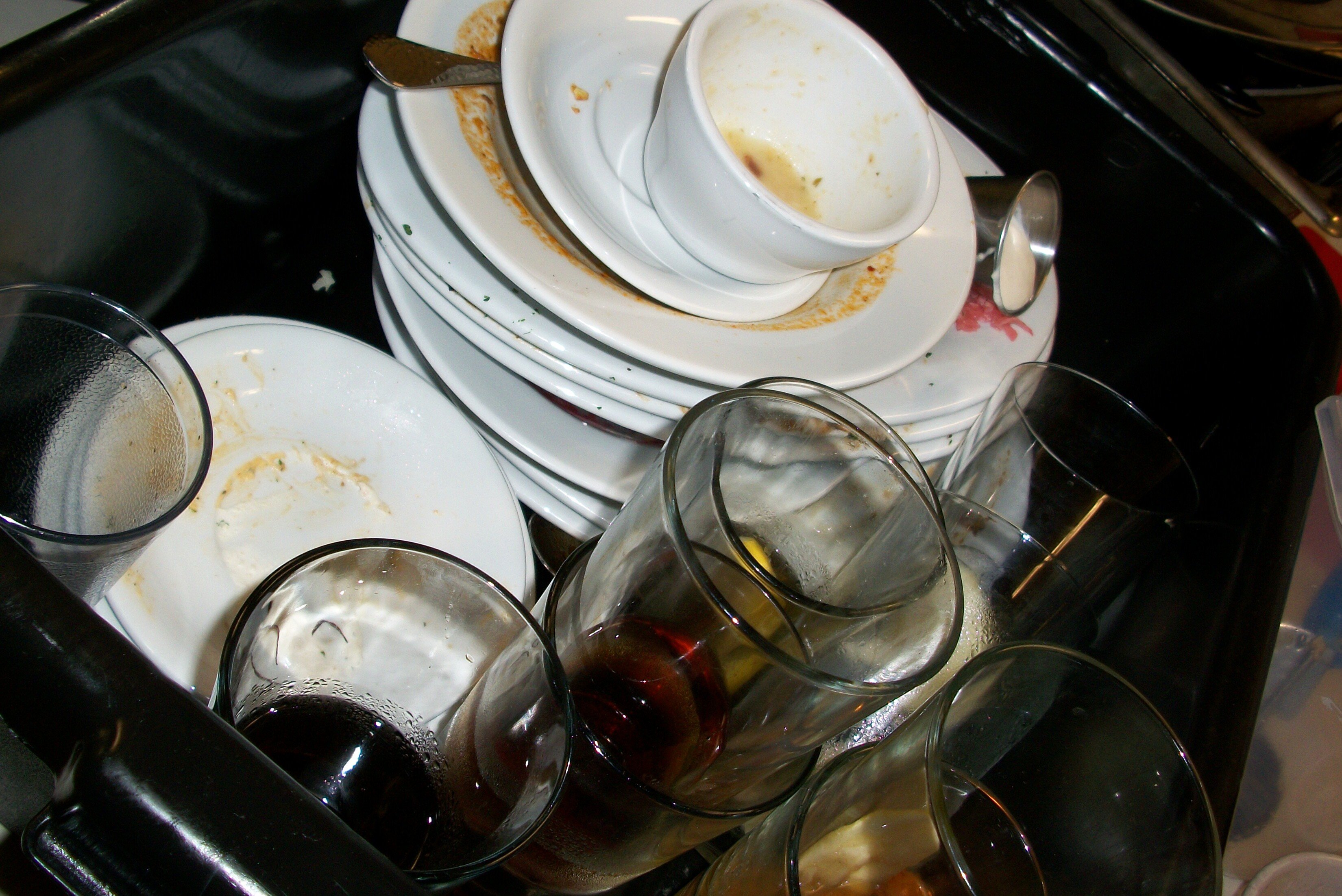
One day in particular I was feeling overwhelmed by the sheer volume of dishes I had to wash. I wanted my children to take care of washing their own dishes but I was finding it hard to hold them accountable. There were cups EVERYWHERE. Plates, bowls, and utensils filled the kitchen sink and I did not know to whom they belonged.
As usual I just cleaned the mess myself. As I did so a growing frustration simmered inside me. The only way this amount of clutter could amass in such a short period of time is if the kids got a new cup every time they were thirsty. I realized that each child was probably using 3-4 cups a day. It became increasingly evident why I could not hold them accountable. When they had 30 cups to choose from in the cupboard then it did not cross their mind to find a missing cup when it was much easier to grab a new one.

The Key to Parenting Children with ADHD: Tame the Chaos of Clutter
As I considered how to parent this situation, I realized I was part of the problem. The environment that I had provided for my children was not the best set up for their ADHD. When you have ADHD you are prone to overstimulation coupled with a short attention span. When you have 20 toys to choose from then you might play with 15 toys in the span of an hour because each toy may hold your attention for just a few minutes. However, if you only have one toy then you have no choice but create ways to entertain yourself with that toy for an hour. In this case less is more.
The dilemma I was facing is that my kids had too many options. This in turn made them feel overstimulated. Due to their ADHD they struggle with impulsivity coupled with a short attention, which makes it hard for them to consider consequences. This is worsened by the nature of humans to take the path of least resistance.
As a parent of two children with ADHD, I need to help them improve their attention span, impulsivity, and the cognitive disorganization. I want them to function well in a world where most people are not fortunate enough to have ADHD. However, I do not want to stifle the positive traits of ADHD that puts them ahead of their peers. I had to make sure to find a balance that worked for their needs.
I had to take into account that my kids talk faster, move faster, and their rapid and somewhat disorganized thoughts allow them to think outside the box. They are masters at finding ways to work the system to their advantage. While this is a challenge to parent, it is a blessing in so many ways. I did not want to become an overly harsh and strict parent, but I had to set up our house in a way that took some of the challenge out of parenting.
I also needed to help them close the gaps in the other ways their ADHD left them a few steps behind their peers. It was important to meet them where they were at, but also keep them moving on a path to organized living. In truth, they needed to want to learn to overcome these difficulties so that as adults they do not live in a house of chaos, clutter, and mess. However, in order to baby step into this direction, I needed to decrease the stimulus in their environment. In doing so, their attention spans would improve and it would be easier for them to stay organized. It would also be easier for me to hold them accountable.

Less is More: Choose a life free of the burden of worldly possessions
Like a ray of sunshine whose dazzling beams push through a crack in the clouds, the spark of an idea made its way through the clutter of my mind. The monks vows to not accumulate worldly possessions was quite brilliant. By choosing to live without the weight of worldly possessions their life was simpler. With wisdom they lived a life where less is more. In doing so monks do not have the stress of managing a mountain of dishes. They have one plate, one fork, one spoon, and one cup. They have to clean the dish right away or eat from a dirty dish the next time they need it. Lost dishes are quickly found when there is no dish waiting to replace it.
A light bulb went off in my head.
Less IS more AND I had the power to choose less.
In that moment of truth I said to myself: [bctt tweet=”I am no longer willing to accept the crushing burden that comes with my worldly possessions. I need to challenge myself to get rid of the clutter and live a life where less is more.”]
The first step was to gain insight into the clutter I left in my wake. It became increasing evident that part of the difficulty with keeping up with the kid’s clutter was that it was compounded by my own. While I was much better at staying organized and tidy, I often chose the path of least resistance as well.
The Less is More Challenge
I started to pay better attention to my own habits. Soon I realized that I also used more than one cup a day. I did not wash and reuse my cups. Instead my cups found themselves added it to the mountain of dishes crammed into the dish washer. It was fast and easy to pop in a dish cleaning tab and run the dishwasher every other day. The burden of loading and unloading the dishes could be easily remedied. We just needed to adopt a lifestyle where less is more.
As a result, I decided to get rid of our clutter by making a shift in our lifestyle. As a family we would be adopting a life of simplicity with fewer possessions. I knew it would not be easy and seeds of doubt were already burying themselves deep in my mind. Since I am known to be motivated by proving others wrong, I decided to compete against my own self doubt. With no one but myself to hold me accountable, I decided to partake on a 30 day “Less is More Challenge.” The results were life changing.
The Less is More Challenge started in my kitchen but eventually spread throughout the entire house. It was a major overhaul and lifestyle shift. However, holding each person accountable meant my burden of household chores diminished significantly.
It started in the Kitchen with one Cup
The light bulb idea that sparked my Less is More Challenge was based on minimizing my household responsibilities and adopting a simpler lifestyle. I could choose not to take on the stress of those extra dishes. As a result, I decided that each person would get one cup for the week. It was a trial of sorts to see if I could keep the children and myself accountable. It worked well for a while. However I ran into trouble. My angelic children have a streak of evil genius (despite what my mother has told you, they get this from their father). They were crafty at sneaking extra cups. I found it hard to call them out on it, because I could not remember their chosen cups for the week.
So Mama went back to the drawing board and then laid down the law.

When the plan was not working I went back to the drawing board
I sat the kids down and we talked about why it was important to create good habits now. We discussed how adults are expected to be neat, tidy, and organized. I also explained that adults do not suddenly develop these skills, but instead learn them in their child hood. We also talked about the consequences that adults face at work, home, and socially when they are unorganized and messy.
I also let them know that because of their choices I had to revise the rules. The consequence of choosing to use extra cups without permission meant they were banned from all cups in the cupboard. I gave them both a disposable plastic cup. In big bold letters I wrote their name on their cup with a Sharpie. I explained my expectation that this is the one and only cup they can use all week. I also made the reward clear. After a full week of not losing the cup or using other cups, I would allow them to choose their cup for the next week.
BY HOLDING EACH PERSON ACCOUNTABLE TO USING ONE CUP A WEEK, THE AMOUNT OF DISHES I HAD TO WASH DROPPED DRAMATICALLY. I WAS ABLE TO CUT BACK TO RUNNING THE DISHWASHER TWICE A WEEK INSTEAD OF EVERY OTHER DAY!!!
One cup led to one Plate and one Set of utensils
In the past, the children’s hyperactivity made it overwhelming to create a simple dinner clean up routine. By simply shifting the responsibility of a cup to each child, it became easier to hold them accountable. My plan started slow and I was willing to revise it along the way. In the end it worked masterfully. Within a couple of weeks everyone had the new system down and the kids had proven themselves worthy. As a reward my diva daughter picked out a wine glass as her cup for the week. My son chose a grown up glass instead of a plastic cup. Each child was bursting with pride. Because they chose to behave like a grown up they were rewarded with grown up glasses.
Since we had settled into that new routine, I felt ready to extend the Less is More Challenge further. In addition to one cup a week, each family member was allowed to use just one plate and one set of utensils. Each person was responsible for keeping their dishes clean and available. It took another week or two to iron out the kinks, but in time the results were amazing! I felt less stressed by dinner time clean up because each person was taking responsibility for their mess. The kids were even helping wash the pots, pans, and the table. It became part of their routine to help so it was not a battle.
NOW I WAS DOWN TO RUNNING THE DISHWASHER ONCE EVERY 7-10 DAYS!

What started in the kitchen led to overhauling the entire house
In time I applied the Less is More Challenge to the children’s toys, the children’s clothes, my clothes, and my possessions. The results were amazing. I was no longer constantly stepping on Lego pieces and finding clothes scattered throughout the house. It was easy to hold the kids accountable for being organized and tidy. In the long run, this meant less work for me. In the future, I hope to share my experiences for taking the Less is More Challenge for clothes and toys as well. I am proud to say that laundry and Legos no longer own me. But for now let me share a few tips on how I made this work in the kitchen.
Tips on how to make the Less is More Challenge work for you
[sociallocker id=”7014″]
• Start simple. Do not try to overhaul everything at once. Start with a cup.
• Be patient and work out the kinks. Don’t be afraid to go back the drawing board. Once everyone is settled take on more.
• Clearly define your expectations. Make it clear what you expect from each person. Define the consequences if each person does not do their part and how this will effect them as adults.
• Encourage and offer praise in the moment for good behavior.
• Fight the urge to give in and do it yourself. Hold each person accountable.
• Praise your children. Make a point of expressing gratitude when they least expect it. I tend to do this at bedtime, while driving, or while eating meals.
◦ At bedtime, I might casually mention how it makes me proud to see their progress with not losing their cup or misplacing it in another room of the house.
◦ While driving with the kids in the back seat I will thank them for their help washing the pots and pans the night before. I also like to take it a step further about how their help makes me feel. I explain how relaxed I feel at dinner time when I have such good helpers who take care of their mess.
◦ At dinner time we have a lovely tradition. Each person takes a turn to say one good thing and one bad thing about their day. Sometimes I use this opportunity to brag on them. I tell them that they good thing about my day was coming home to a tidy kitchen because everyone washed their own breakfast dishes.
[/sociallocker]

About the Author
Amy Morrison is a hall of fame athlete and a psychiatric PA who specializes in the treatment of ADHD. She has over 11 years of experience in treating ADHD and other psychiatric illnesses. Her greatest and most rewarding challenge is being the mother of 2 amazing and energetic children ages 10 and 6. In her free time she enjoys crafting, reading, writing, and playing soccer.