Why You Feel Compelled to Manage Everything (and How to Stop Feeling So Depleted)
Many high‑functioning professionals with ADHD experience chronic anxiety, emotional exhaustion, and burnout at work despite being capable, successful, and driven.
If you feel constantly responsible for preventing problems, managing others, or maintaining control in chaotic environments, you may be experiencing ADHD trauma responses at work—a form of work‑related trauma response—rather than simple stress. Over time, this pattern can lead to nervous system dysregulation, increased anxiety symptoms, digestive issues, and disrupted sleep. Understanding how ADHD, trauma, and workplace stress intersect is often the first step toward healing.
How a Trauma Response Shows Up in the Workplace
A trauma response is your body’s automatic attempt to keep you safe. When your work environment feels unpredictable or unsafe—due to poor leadership, constant urgency, or frequent crises—your nervous system may remain stuck in fight‑or‑flight mode.
Common trauma‑based behaviors at work include:
Over‑functioning or over‑managing
Difficulty delegating or stepping back
Hypervigilance and constant problem‑solving
Anxiety that worsens when trying to relax
Step in quickly to reduce chaos
For many people, this pattern began earlier in life, when being highly aware, responsible, or constantly “on top of things” was necessary to feel safe. Over time, these behaviors become automatic. They are often rooted in childhood trauma, developmental trauma, or unmet emotional needs, particularly in families where ADHD runs in families. When caregivers had undiagnosed or untreated ADHD, children often adapted by becoming hyper‑vigilant, over‑responsible, or emotionally attuned in order to maintain stability. The problem is that what once protected you can later drain you.
In adulthood, these early adaptations can resurface as ADHD trauma responses at work, driving over‑functioning, anxiety, and burnout—especially in high‑demand or unpredictable environments.
Why Over‑Functioning Leads to Burnout and Anxiety
Over‑functioning, often driven by ADHD trauma responses at work, keeps the nervous system activated. Over time, this can result in:
Chronic anxiety and low mood
IBS and stress‑related digestive symptoms
Insomnia or nighttime hyperarousal
Emotional exhaustion and depletion
This is not a failure of coping skills—it is a trauma‑driven stress response that your body has not yet learned it can turn off.
Why “Just Doing Less” Feels Impossible
You may logically know that you cannot keep operating at this pace. Yet when you try to step back, your body reacts. In individuals experiencing ADHD trauma responses at work, attempts to disengage often trigger increased anxiety. This occurs because the nervous system has learned to associate stepping back, slowing down, or relinquishing control with danger rather than safety.
Common reactions include:
A surge of fear or urgency
Physical discomfort, increased tension or pain, or GI symptoms
A sense that something bad will happen if you don’t intervene
Difficulty sleeping or turning your mind off when you don’t intervene
Racing thoughts or catastrophic thinking
This isn’t weakness or lack of willpower. It’s your nervous system responding as if disengaging equals danger. Your body isn’t resisting change—it’s trying to protect you based on past experiences.
The Real Goal: Reducing Nervous System Depletion
The goal is not to stop caring or stop working hard. The goal is to reduce over‑engagement so your nervous system can recover.
By learning how to do less without feeling unsafe, you allow your body to rebuild energy, regulate stress hormones, and improve emotional resilience.
When ADHD Is Part of the Picture
For some individuals, underlying ADHD further intensifies this cycle. When ADHD is present but untreated, the brain must work significantly harder to maintain focus, organization, and emotional regulation—especially in high‑demand or chaotic environments—often reinforcing ADHD trauma responses at work and accelerating anxiety, over‑functioning, and burnout.
This added cognitive load can:
Increase baseline anxiety and mental fatigue
Worsen over‑functioning and over‑control
Reduce tolerance for uncertainty or unfinished tasks
Accelerate burnout and nervous system depletion
In these cases, the nervous system may rely even more heavily on hypervigilance and constant engagement just to keep up.
How Treating ADHD Can Support Trauma Recovery and Reduce Burnout
For some individuals experiencing chronic anxiety, over‑functioning, and work‑related burnout, underlying ADHD can significantly amplify nervous system strain—particularly in fast‑paced or chaotic work environments.
When ADHD is present but untreated, the brain must expend far more energy to maintain focus, organization, and emotional regulation. Over time, this constant cognitive effort can worsen anxiety, increase depletion, and reinforce trauma‑based patterns of hypervigilance and over‑control.
At Morrison Clinic Psychiatry, a Texas‑based virtual psychiatry practice, we specialize in the accurate diagnosis and evidence‑based treatment of ADHD with medication across the lifespan. For patients in this population, treating ADHD with medication can offer meaningful benefits, such as:
Improved executive functioning, making it easier to prioritize, delegate, and tolerate unfinished tasks
Reduced cognitive overload, which often lowers baseline anxiety and irritability
Greater mental clarity and energy efficiency, decreasing overall depletion
Increased ability to pause rather than react, reinforcing trauma‑informed behavioral change
Improved executive functioning, making it easier to prioritize, delegate, and tolerate unfinished tasks
Increased capacity to pause rather than react, supporting trauma‑informed behavioral change
When the brain is better supported, the nervous system often does not need to rely as heavily on hypervigilance and over‑control to function. For some patients, this creates more internal safety, allowing trauma‑related patterns to soften and making therapeutic work—such as boundary setting or trauma‑informed therapy—more accessible.
Medication does not resolve trauma, but for the right patient, treating ADHD can reduce the background noise that keeps the nervous system in a constant state of effort and urgency.
Taking the Next Step
If you recognize yourself in this pattern and wonder whether ADHD may be contributing, a thorough assessment can provide clarity and options.
YOU CAN:
Schedule a comprehensive ADHD and psychiatric evaluation
Morrison Clinic Psychiatry provides virtual care throughout Texas, integrating ADHD treatment within a trauma‑informed psychiatric approach.
How to Start Healing a Trauma Response at Work: Beyond medication
Start With Awareness of Trauma Triggers
Notice when work situations activate urgency, anxiety, or a need to control. Identifying trauma triggers helps interrupt automatic stress responses. What’s happening around you? What do you feel in your body? Awareness alone begins to loosen the pattern.
Practice Gradual Disengagement
Instead of withdrawing completely:
Pause before responding. Use this time to take deep grounding breaths and consciously delay your response
Let others sit with discomfort longer. Intervene less frequently.
Delegate more intentionally.
Step in at 80–90% instead of 100%
Small changes help retrain the nervous system without overwhelming it.
Ask If You Feel Safe
When anxiety arises, ask:
“Do I feel unsafe right now?”
“What am I afraid will happen if I stop managing?”
This separates present‑day stress from trauma memory.
Pay Attention to Somatic Symptoms
IBS, muscle tension, fatigue, and insomnia are signs of chronic nervous system activation, not personal weakness. They often indicate that your environment is demanding more than your nervous system can sustainably give.
Reinforce Safety Through Experience: Notice What Doesn’t Happen
Each time you do less and survive the discomfort, your nervous system learns that disengagement does not equal danger. This is how your nervous system slowly learns that stepping back can be safe.
After doing less, reflect:
Did the feared outcome actually occur?
Did others manage without you?
Was the result tolerable, even if imperfect?
When Insight Isn’t Enough- Trauma‑Informed Therapy Is Helpful
For many people, understanding these patterns intellectually doesn’t fully resolve them. Trauma-informed therapies—such as EMDR—can help retrain the nervous system so it no longer reacts as if disengagement is dangerous.
Healing isn’t about forcing change. It’s about helping your body feel safe enough to choose something different. Trauma‑informed therapy, including EMDR therapy and somatic approaches, can help:
Rewire trauma‑based stress patterns
Reduce anxiety and hypervigilance
Improve sleep and physical symptoms
Restore a sense of internal safety
These therapies focus on healing the nervous system, not just managing symptoms.
Final Thought
If your body won’t let you relax, it may not be broken—it may be trying to protect you. Anxiety, burnout, and exhaustion are often signs of a nervous system doing its best to protect you. Learning to listen, respond with compassion, and gradually do less can be a powerful step toward reclaiming your energy and well-being.
Healing begins with awareness, compassion, and gradual change—not forcing yourself to “push through.”
Understanding Trauma Survival Responses
A Reflection Guide for CPTSD Assessment and Nervous System Awareness
If you’re preparing for a CPTSD assessment or trying to better understand your trauma responses, this guide is designed to help you pause, reflect, and gather meaningful insight about how your nervous system responds to stress and perceived threat.
This is not a test. There are no right or wrong answers. The purpose is awareness.
Why This Reflection Matters
Trauma responses are not character flaws or personal failures. They are automatic survival strategies your nervous system learned during times when safety, protection, or support were limited or unavailable.
By noticing how these responses show up in your body, thoughts, emotions, and behaviors, you and your clinician can better understand what your nervous system has learned to do to keep you safe—and how it might be supported in learning new patterns.
You can use this reflection:
Before an upcoming CPTSD assessment
To prepare for therapy sessions
Ongoing, to track patterns and notice shifts over time
How Trauma Survival Responses Work in the Nervous System
Your brain and central nervous system (CNS) are programmed to respond immediately when they detect a threat to safety or survival. This happens automatically, without conscious thought.
A simple example
Imagine you trip while walking down the stairs.
Before you have time to think:
Your body grabs the railing
Your brain generates the thought “I could fall and get seriously hurt or die”
You feel a surge of fear
These happen together. The nervous system sends:
A physical survival response (grabbing the rail)
A cognitive message (a danger‑based thought)
An emotional signal (fear)
When the threat passes and safety is restored, the nervous system releases this activation and the body returns to baseline.
What Happens With Trauma
With chronic or overwhelming trauma—especially when escape, protection, or support were not possible—the nervous system may not fully complete or release this survival response.
As a result, the brain may continue sending similar messages even when no immediate danger is present.
These messages often show up as:
Core negative feelings: powerlessness, unsafety, or a sense of being damaged or defective
Negative cognitions: “I’m not safe,” “I’m helpless,” “Something is wrong with me”
Hypervigilance: constant scanning for danger, rejection, or failure
Somatic activation: tension, agitation, shutdown, numbness, or exhaustion
When this activation persists, people may experience ongoing physical symptoms, distressing thoughts, and emotional reactions that feel confusing, overwhelming, or disconnected from the present moment.
Understanding Trauma Survival Modes (CPTSD)
Your nervous system developed different survival modes to cope with threat. These modes can shift depending on what the nervous system believes will keep you safest.
Use the handout below as a reflection guide. You may notice overlap—many people move between modes.
How to use this guide
Rank core feelings from 1–3 (1 = most intense, 3 = least intense)
Check any thoughts, emotions, or body signals that fit
These patterns are nervous‑system survival responses, not signs of weakness or failure. They developed to help you endure what was once overwhelming.
Noticing them with curiosity—rather than judgment—is a powerful step toward healing, regulation, and change.
If you’re working with a clinician, this awareness can support deeper understanding and more targeted treatment during your CPTSD assessment and beyond.
The Golden Bridge: How to Disarm Fear, Obligation, and Guilt Without Escalation
Understanding the Issue
You may have noticed that, at times, you feel responsible for the happiness, problems, or responsibilities of others in your life. You should consider if there are people in your life that have noticed your sensitivity to being misunderstood or judged and if they are using that sensitivity to condition you to take on their responsibilities. If that is occurring use the FOG tool to help you identify when you may be being misused or manipulated as it is a common tactic employed against people pleasers.
What is FOG? —Fear, Obligation, and Guilt—
Fear:
You might worry about what will happen if you don’t do what someone wants. Will they retaliate, undermine, or harm you. You could worry or fear they will be upset, act out, or withdraw.
“Something bad will happen if you don’t do this.”
Obligation:
You may feel like you “owe” them, responsible to manage their disappointment or emotions, or that it’s your job to be available or to fix their problems.
“You have to—this is your responsibility.”
Guilt:
You may feel bad for saying no or for putting your own needs first. Feelings of guilt and shame can make it difficult to assert your needs.
“You’re hurting me if you don’t comply.”
How to Recognize When This is Happening
You feel anxious or uncomfortable saying no.
You feel confused, resentful, or conflicted saying yes.
You notice you’re always trying to keep the peace, even at your own expense.
You feel responsible for someone else’s feelings or outcomes.
You feel guilty or selfish when you try to set boundaries.
Steps You Can Take
Pause and Notice:
When you start to feel fear, obligation, or guilt, take a moment to ask yourself, “Is this feeling coming from me, or am I being influenced to feel this way?”
Name the Pattern:
Remind yourself, “This is FOG. I am being made to feel responsible for something that isn’t mine.”
Identify your need:
Focus solely on identifying what you need, without factoring in the other person’s feelings, expectations, or reactions. Clearly define your need in your own words. Choose a way to meet your need that does not depend on the other person’s involvement, approval, or behavior.
Set Boundaries:
Practice saying things like, “I am not available, but I trust you are capable of finding someone to support you.” “I care about you, but I am not responsible for your choices,” or “I need to take care of myself right now.”
Allow Yourself to Say No:
Remember, it’s okay to say no, even if it feels uncomfortable at first. If you were conditioned to be pleasing then you will need to rewire your brain that it is safe to say no.
Reflect After Interactions:
Take time to journal or think about how you felt during and after the conversation. Did you notice FOG? How did you respond?
Practice Self-Compassion:
Be kind to yourself as you learn these new skills. It’s normal to feel uneasy at first, but with practice, it will get easier.
Do Not Self Abandon:
Work on being 100% comfortable with the other person labeling you as a villian. Trust your truth. Trust that healthy people will see your truth.
Golden Bridge Communication Method
FOG doesn’t invite discussion. It corners you emotionally, making it hard to think clearly or respond calmly. Research from crisis communication and healthcare settings shows that people become most upset not from bad outcomes, but from conflicting messages, emotional pressure, or loss of trust. 1
That’s where the Golden Bridge comes in.
What Is the Golden Bridge?
The Golden Bridge is a short, neutral way of responding that allows you to exit a coercive interaction without escalating it.
It’s called a “bridge” because it doesn’t argue, justify, or comply—it simply moves the conversation to safety.
Importantly, the Golden Bridge is not about winning, convincing, or fixing the other person. It’s about protecting your nervous system and preventing distress from spiraling.
Why Pressure Makes Things Worse
When someone uses fear, obligation, or guilt, your brain shifts into threat mode. In that state:
Reasoning narrows
Emotions intensify
Compliance may happen—but at the cost of abandoning your needs resulting in resentment, shame, or exhaustion
Decades of work in crisis settings show that coercion and emotional pressure increase distress, while calm, predictable communication reduces it 1. Even well‑intended pressure (“I’m only saying this because I care”) can backfire.
This is true across many environments—medical crises, family conflict, and emotionally charged conversations—where trust erodes fastest when people feel pushed rather than respected 2.
How the Golden Bridge Helps
The Golden Bridge works because it does less, not more.
It is:
Simple – easy to remember when emotions are high
Unengaging – it doesn’t invite debate or emotional negotiation
Non‑coercive – it refuses fear, obligation, and guilt as motivators
Instead of escalating the moment, it lowers the temperature.
Healthcare research consistently shows that people calm more quickly when communication is predictable, respectful, and emotionally neutral, rather than persuasive or urgent 3.
What the Golden Bridge Is Not
It is not:
Explaining yourself
Apologizing to keep the peace
Reassuring the other person emotionally
Problem‑solving in the moment
In fact, studies of crisis response show that trying to “fix” things too quickly can unintentionally make people feel more trapped or hopeless 4.
Sometimes the most stabilizing response is simply not adding more pressure.
Why It Works So Quickly
FOG works by speed—it creates urgency so you feel you must respond immediately. The Golden Bridge counters this by being pre‑decided. You don’t have to think. You don’t have to defend yourself.
Calm, consistent communication—especially when emotions are high—has been shown to reduce distress and build trust across medical, family, and crisis situations 5.
In other words, the Golden Bridge works because it’s boring. And boring is calming.
The Takeaway
When fear, obligation, and guilt show up, the problem isn’t disagreement—it’s coercion.
The Golden Bridge gives you a way to:
Step out of emotional pressure
Protect your sense of autonomy
Reduce distress without escalating conflict
It’s not about being cold or uncaring. It’s about recognizing that connection can’t happen when someone feels cornered.
Sometimes the most compassionate move—for everyone involved—is to build a bridge to safety and walk across it.
2 Step Process to Employ Golden Bridge Communication
Step 1: Call out the behavior in a non threatening and non engaging manner:
Question if the other person is wanting you to feel fear, obligation, or guilt in a non confrontational way.
Example: “I know I must be wrong because I can’t imagine you would do this, but are you wanting me to feel obligated to bill hours when this no billable work to do?”
Step 2: Provide them a golden bridge to escape and de-escalate:
Provide them an easy escape to the admirable person you expect them to be that defuses and de-escalates.
“I must be wrong. Your integrity is impeccable and admire you as a leader so I can’t imagine that you are directing me to create unnecessary billable hours for the client.”
Download the Morrison Clinic Psychiatry Handout: The Golden Bridge: How to Disarm Fear, Obligation, and Guilt Without Escalation
Video of CIA Spy Explaining Golden Bridge Communication
In this video, Chase Hughes—a former CIA operative and expert in behavioral psychology—describes using this exact technique while working in high‑risk environments with narcissistic and coercive individuals. These were situations where emotional pressure, manipulation, and power imbalance were not occasional—they were constant and extreme.
What’s striking is not that the Golden Bridge worked there, but why it worked. In environments designed to provoke fear, obligation, and guilt, engaging emotionally or trying to “win” only escalated danger. The safest move was often the simplest one: calm, neutral, unengaging communication that removed emotional leverage altogether.
If a method can reliably reduce conflict and distress under those conditions—where stakes are high and manipulation is deliberate—imagine the impact it can have in everyday life.
Most of us aren’t dealing with spies or interrogations. We’re dealing with difficult family dynamics, workplace pressure, emotionally charged relationships, or moments where someone pushes us using urgency, guilt, or moral pressure. The same principles apply, just at a lower volume.
The Golden Bridge isn’t about being cold or passive. It’s about recognizing when a conversation has shifted from connection to coercion—and choosing a response that protects your nervous system instead of feeding the pressure.
When you stop engaging with fear, obligation, and guilt, distress drops. And when distress drops, clarity and choice return.
Letting Go of the Ladder: How a “Nobody‑to‑Nobody” Mindset Restores Autonomy
Much of modern stress is fueled by an invisible ladder we carry in our minds. At work, in social settings, and even in our private thoughts, we unconsciously rank ourselves and others—who matters more, who has authority, who should be impressed, who must not disappoint. Over time, this hierarchical thinking quietly erodes autonomy and replaces choice with pressure.
A helpful way to disrupt this pattern is by adopting what we call a “nobody‑to‑nobody” mindset.
What Is the “Nobody‑to‑Nobody” Mindset?
This mindset does not mean you lack value or purpose. Instead, it reframes social roles, titles, and status markers as psychological constructs, not measures of inherent worth. In a “nobody‑to‑nobody” interaction, two people meet as equally human—equally limited, equally deserving of dignity, and equally entitled to autonomy.
When hierarchy dissolves, so does much of the fear that drives over‑performance, people‑pleasing, and chronic self‑monitoring.
Why Hierarchical Thinking Feels So Trapping
Hierarchical thinking ties identity to performance. When worth depends on rank, approval, or productivity, every interaction carries an evaluative threat. The nervous system responds as if something essential is at stake, leading to anxiety, avoidance, or burnout.
Over time, individuals may feel “stuck” in roles they no longer choose freely—especially in work environments where expectations are implicit but relentless or social settings where they feel insecure.
Decentering Identity From Role
One of the most powerful shifts in the “nobody‑to‑nobody” approach is learning to separate who you are from what you do. You are not your title, output, or reputation. Roles can be performed well or poorly; your humanity remains unchanged.
This decentering allows people to engage more thoughtfully rather than reactively. When status no longer defines the self, choices become clearer and more intentional.
How This Mindset Restores Autonomy
When social hierarchy loosens its grip:
External pressure decreases
Fear of evaluation softens
Decision‑making feels less urgent and more deliberate
Personal agency returns
People often describe feeling lighter, more grounded, and more capable of saying no—or yes—without self‑betrayal.
A Quick Reset
When you notice pressure, judgment, feelings of inadequacy, or the urge to perform, pause and silently repeat 3 times:
“Nobody to nobody.
Two humans, no ranks.
I choose freely.”
Take one slow breath between each line, then respond from that calmer, non‑hierarchical stance.
This brief reset helps shift the nervous system out of threat mode and back into choice.
How to Practice the “Nobody‑to‑Nobody” Mindset
1. Notice hierarchical thinking
Begin by identifying moments when you automatically rank yourself or others (e.g., “They matter more than me,” “I should be impressing them,” “My worth depends on this role or title”).
2. Name hierarchy as a mental construct
Remind yourself that social roles, titles, and status markers are human‑made systems—not measures of inherent worth or authority over your inner life.
3. Apply the “nobody‑to‑nobody” reframe
Intentionally reframe the interaction as one human relating to another human:
You are a person, not a role.
They are a person, not a rank.
Neither of you has more intrinsic value or control over the other’s autonomy.
4. Decenter identity from performance
Practice separating who you are from how you perform. Your value does not increase or decrease based on productivity, approval, or evaluation.
5. Reduce evaluative threat
When pressure arises, ask: “Am I reacting to an actual demand, or to a belief that I’m being judged or ranked?” Use the reframe to lower perceived threat and urgency.
6. Reclaim choice and agency
After reframing, consciously choose how you want to respond rather than reacting from obligation, fear, or hierarchy‑based expectations.
7. Practice consistently
Apply this mindset in low‑stakes interactions first, then gradually in work or authority‑related situations as it becomes more automatic.
Download the Morrison Clinic Psychiatry Restoring Autonomy handout for a deeper, practical guide to applying the “Nobody‑to‑Nobody” mindset in daily life.
You don’t need to climb higher, prove more, or earn your right to exist with ease. By meeting others—and yourself—from a “nobody‑to‑nobody” stance, you can step off the ladder entirely and reclaim the freedom that comes from being human first, always.
If this way of thinking resonates, it can be practiced gradually and applied wherever hierarchy has quietly taken over—work, relationships, or the inner critic itself.
How Well Do You Know Yourself?
By: Amy Morrison PA-C at morrisonclinic.com
Journaling as a Pathway to Emotional Awareness
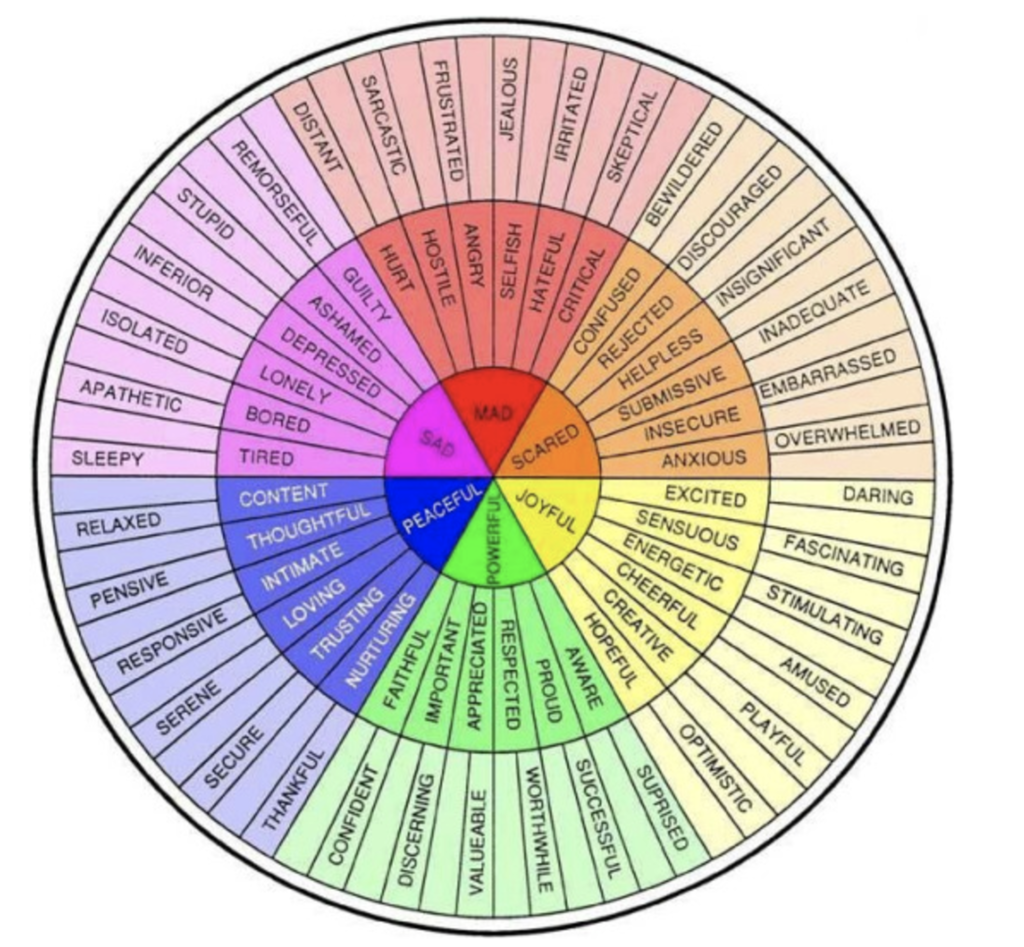
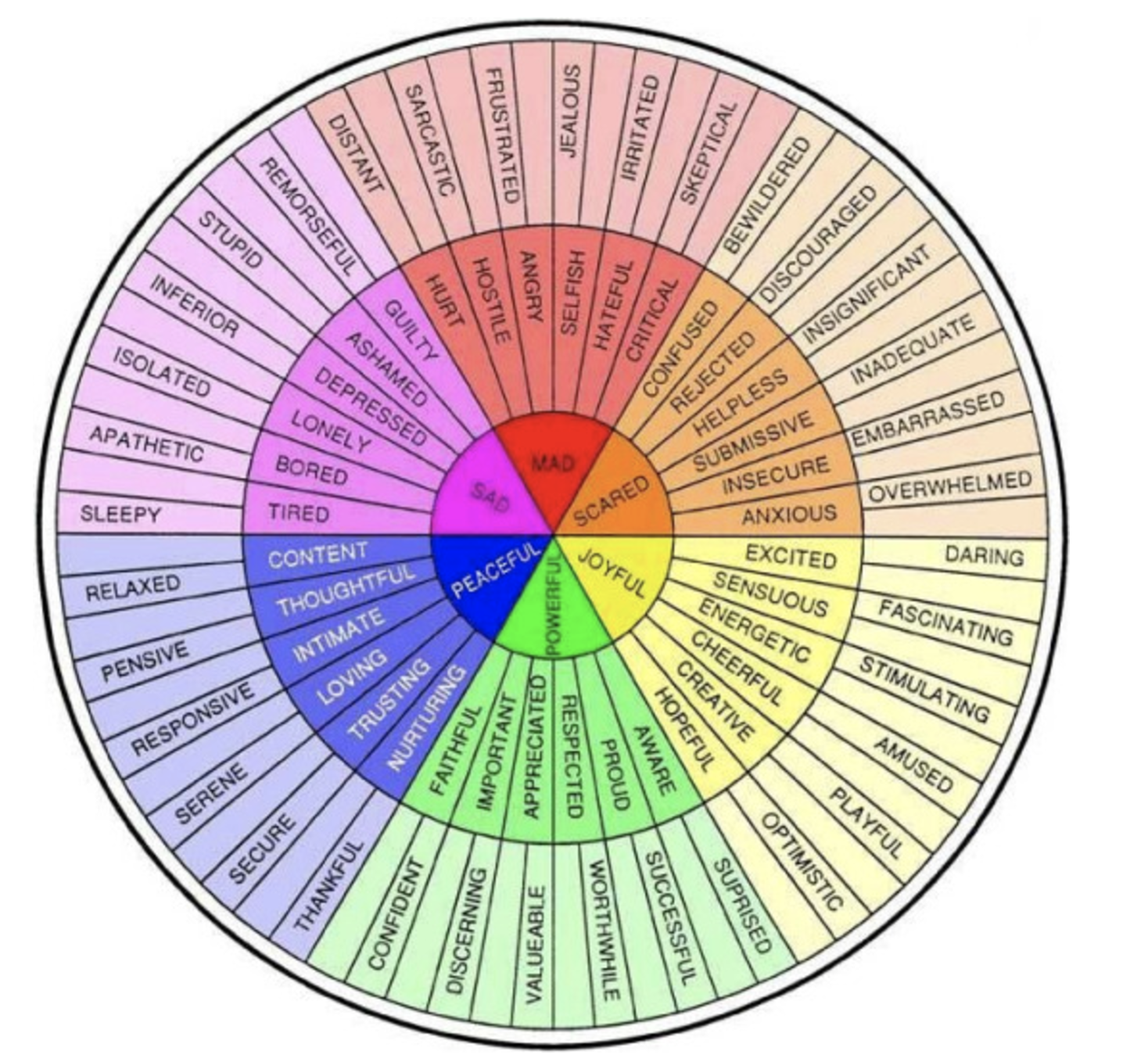
Journaling can be a powerful tool for making sense of both the world around us and our own inner experiences. Yet, for many, the act of starting to write can feel daunting—faced with a blank page, it’s easy to feel overwhelmed and unsure where to begin. In my recent article, “In My House We Believe in Talking About Emotions,” I explored the importance of emotional wellness and the value of being able to identify and name our feelings. I included a helpful visual—the emotion wheel—which organizes a wide range of both pleasant and unpleasant emotions. While this tool is incredibly useful, it can also feel a bit intimidating at first glance. Taking time to get to know yourself and your emotional landscape can make using the emotion wheel much more approachable.
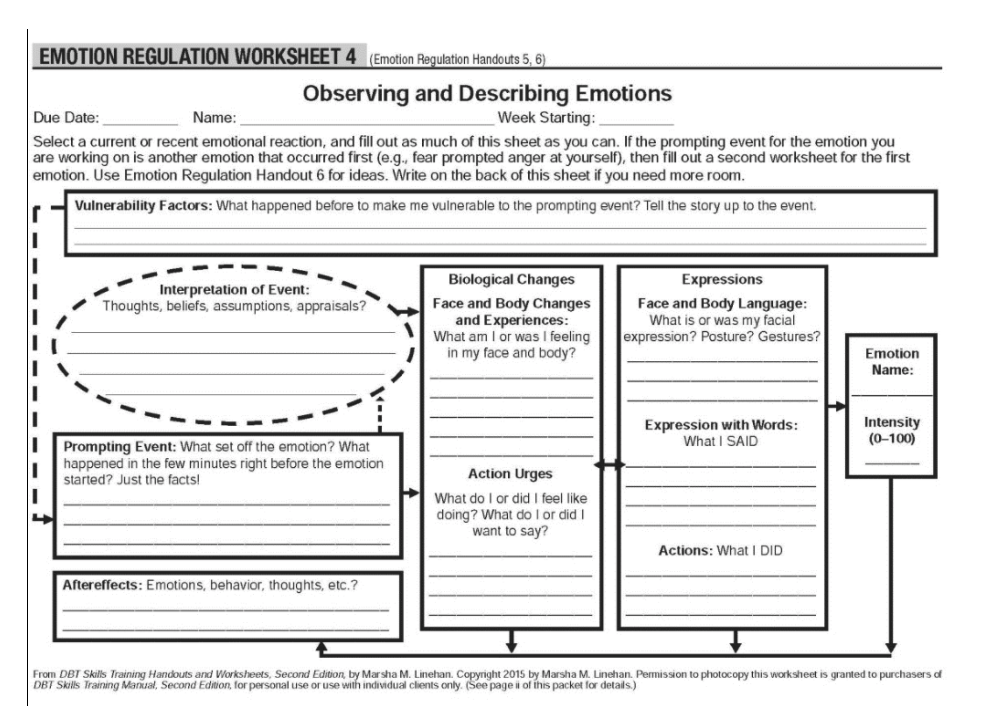
The Emotion Worksheet: A Practical Tool
One resource I’ve found especially helpful is the emotion worksheet. This worksheet is designed to guide you through the process of exploring your feelings. With regular use, it can help you become more attuned to your emotions and how they show up in your life. The worksheet encourages you to connect your feelings with your thoughts, physical sensations, and behaviors. Sometimes, you might notice a change in your behavior or a physical sensation before you even realize what you’re feeling. This tool can help you trace those reactions back to the underlying emotion.
Understanding the Link Between Emotions and Behavior
By observing how your emotions influence your thoughts, body, and actions, you can begin to reduce the intensity of difficult feelings. The more you understand your own emotional responses, the quicker you’ll be able to recognize what you’re experiencing—and the easier it will become to manage those emotions in a healthy way. Remember, predictability is empowering. By establishing a framework to explore your feelings and behaviors, you can create a sense of predictability for yourself as you begin to notice patterns in your actions and emotions.
Don’t Forget to Explore Positive Emotions
This worksheet isn’t just for processing challenging emotions. Imagine how beneficial it could be to use it to reflect on positive feelings as well. Instead of rushing past moments of happiness or contentment, you can take time to savor and fully experience them. Focusing on your positive emotions can enhance your overall sense of wellbeing. Picture yourself pausing to really notice and appreciate the good moments in your day—how much more fulfilling could life feel?
A Simple Challenge for the Week Ahead
I invite you to try this exercise over the next week: each day, spend a few minutes reflecting on one positive and one negative emotion you experienced. Approach this practice with curiosity rather than judgment, and see what insights emerge. My hope is that you’ll find this process both enlightening and rewarding.
In My House We Believe in Talking About Emotions
Why Emotional Awareness Matters
As a society, we often struggle to express our emotions. Many of us feel uncomfortable talking about our feelings, and even more of us have difficulty identifying exactly what we’re experiencing. This lack of emotional awareness means we often don’t recognize negative emotions until they become intense and overwhelming.
In my home, having open conversations about emotions is a priority. I believe that teaching my daughter how to acknowledge and cope with difficult feelings is just as important as providing her with food, clothing, and shelter. My experience as a psychiatric PA has shown me how challenging life can become for adults who have learned to avoid their emotions.
The Yin-Yang of Emotions
In my practice, I primarily prescribe medication for adults with ADHD, depression, and anxiety. A common theme I see is difficulty coping with negative emotions. Many patients don’t understand why it’s important to acknowledge or talk about uncomfortable feelings. To help them, I often use the yin-yang analogy: just as light and dark coexist, so do positive and negative emotions. You can’t fully experience joy without also being able to tolerate sadness. True peace is only possible if you’re willing to sit with fear, just as deep happiness is only possible if you can endure sorrow.
Using The Emotion Wheel
After discussing the yin-yang concept, I like to introduce the emotion wheel—a visual tool that illustrates a wide range of emotions and their opposites. Most adults can identify the basic emotions at the center of the wheel, but they often struggle to name the more nuanced feelings that branch out from the center. This lack of vocabulary can make it difficult to process what they’re experiencing, leaving them feeling lost and overwhelmed. It’s like trying to solve a puzzle without all the pieces.
Our Culture and Emotional Literacy
Unfortunately, our culture doesn’t prioritize emotional education. Growing up, I was taught the importance of physical health—eating well, getting enough sleep, and exercising. But no one ever explained the importance of emotional wellness, or how deeply it can impact our physical health.
My Hopes For My Daughter
My hope is that by the time my daughter leaves for college, she’ll be able to recognize and sit with every emotion on the wheel. I want to teach her not just to care for her body, but also to value her emotional health. What about you? Do you talk to your daughter about emotions? How comfortable are you with labeling your own feelings?
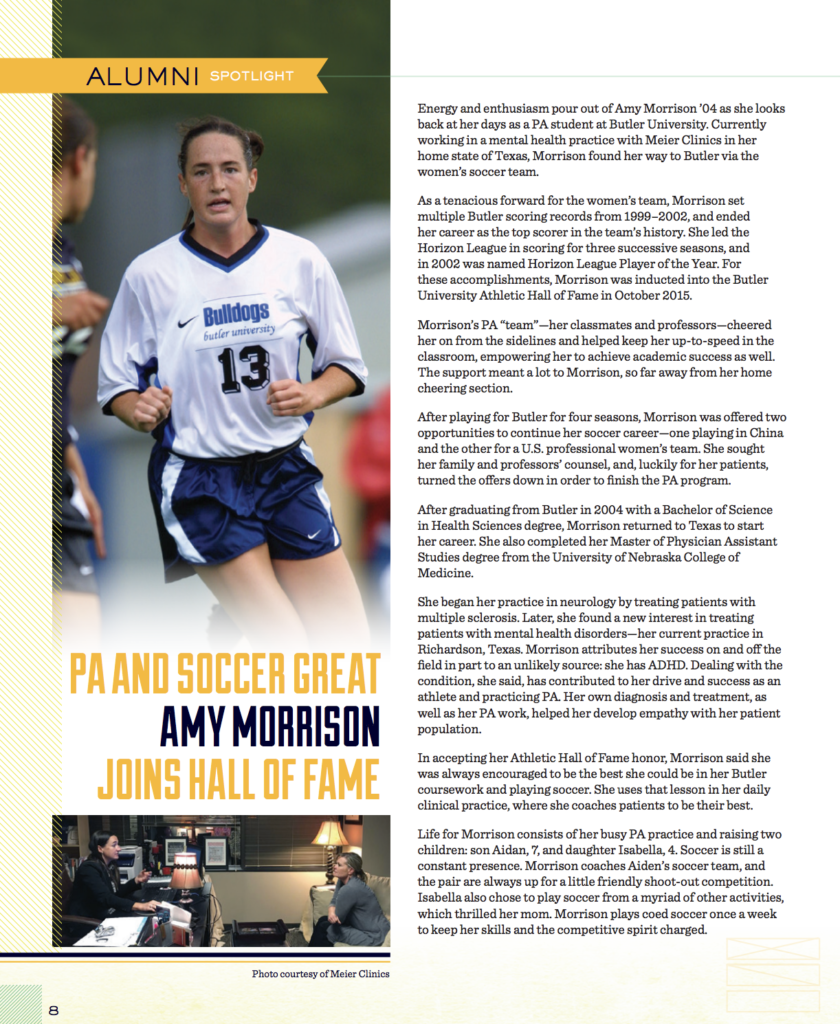
Morrison Clinic Founder Amy Morrison Joins the Hall of Fame
In October of 2015 Amy Morrison, founder of Morrison Clinic Psychiatry in Dallas, TX, was inducted in the Butler University Hall of Fame. Morrison finished her collegiate career as the most prolific scorer in the history of the women’s program setting both single season and career records for the Bulldogs.
Photo courtesy of Butler University
Her single season records include 19 goals, 14 assists, and she holds the top two single season point totals with 45 points in 2002 and 38 points in 2001. Morrison’s 4 seasons with the Bulldogs led to her breaking all time records for goals with 46 and points with 118. In Butler women’s soccer history she is the only player to score at least 12 goals in a season three times.
Morrison excelled in the Horizon League conference, the Midwest Region, and had the prestigious honor of being named an All-American. In three consecutive seasons she led the Horizon League in goals and earned first team all-conference honors. In her final season in 2002 she was named the Horizon League Player of the Year, was picked to the 2002 All-Great Lakes Region team, was named to the 2002 Verizon/CoSIDA Academic All-America team, and was the Butler University Female Athlete of the Year.
“In accepting her Athletic Hall of Fame honor, Morrison said she was always encouraged to be the best she could be in her Butler coursework and playing soccer. She uses that lesson in her daily clinical practice, where she coaches patients to be their best.”
Alumni Spotlight
Click on article to enlarge
Tips on Surviving the Holiday Season
Why are the holidays so stressful?
One word. PRESSURE. We place so much pressure on ourselves around the holiday season. Pressure to decorate the house and make everyone’s favorite food. We feel obligated to spend hoards of money on the perfect presents. We feel pressured to be the perfect family for the Christmas Card photo you send out each year. Then there is the pressure to keep the house clean as guests come and go. When you think about it, all of this pressure is really quite silly.
The holidays are about carving time out of our busy lives to spend time with the people you love and cherish. The people who love and cherish you don’t care if your house is dirty. They don’t care what present you buy them. If you were too tired to make their favorite pie, they will understand. The people that matter in your life care about you as much as your care about them. They also want to spend time with you. I encourage you to start this holiday season with more reasonable expectations. Sit down and consider what is important to YOU. Make a list of what stresses you out about the holidays and see if you can eliminate some of those stressors. Then talk to your loved ones and let them know the changes you are going to make and why. Tell them how you feel and ask them for their help in keeping you accountable. Let them know you are going to keep your focus on quality time with friends and family. Remind them that you will be staying within your budget. Most importantly, give yourself permission to not try to please everyone else.
How can you decrease your obligations?
Our friends and family pressure us into holiday activities and gatherings. Don’t get me wrong. I love so many of my family’s holiday traditions. But a few years ago, I decided to make a change. During the fall and winter there is a constant succession of holidays from Halloween to New Years. You hardly finish putting up the decor for one before you end up taking it down and replacing it with another holiday theme. I realized that my life was busy enough, that I really didn’t need the extra pressure. I knew I had to make a change so that the holidays would be refreshing instead of exhausting.
Pick your favorite holiday
I decided to pick MY favorite holiday. I did not lot the expectations of anyone else in the family influence my decision. For once I was completely selfish. I chose Christmas. It has always been my favorite holiday. The shopping, pretty wrapping paper, and smells of cinnamon tea make my heart happy. I love the color scheme, decorating the tree, and riding the Polar Express train. The city becomes alive with beautiful lights, glittery ornaments, and giant green Christmas trees. Christmas makes me feeling like a kid again. I want to believe. I cannot get enough of Elfie, our Elf on the Shelf. Scheming his crazy antics is a great way to end a long and stressful day. I’m often so proud of myself that I have to take pictures to send to my friends and family.
So now I no longer decorate the house for any holiday except Christmas. I start slowly and gradually putting up the Christmas decor in early November. Gone are the days of tearing down Thanksgiving and throwing up Christmas decor 30 days before the holiday. Now I don’t rush or succumb to the pressure. I decorate for myself and the joy it brings me. If no one else appreciates it, then that is ok. If someone wanted it done differently than they are welcome to do it themselves. The pressure is off because I am only trying to please myself.
Decide to expect less from other holidays
I am super laid back about the other holidays. I do not get worked up and I do not have any expectations. If Halloween falls in the middle of the week and is too much to take on then we go trunk or treating the weekend before. I love to go pumpkin patches, but we have not been in several years. There has not been enough time in between the kid’s other activities. On a slow weekend, we will pick up pumpkins from the grocery store and paint them at the house.
Thanksgiving comes and goes and I focus on spending time with the family. I do not really care what we eat or where we go. I just want to see my aunts, uncles, and cousins that we do not get to see very often. Thanksgiving Day is often spent at my Aunt’s house mapping our Black Friday assault plan and watching the dog show.
How to host holiday dinners with less stress
When I started hosting Christmas dinner for my extended family I came up with some ground rules. If I was hosting then I had to make it work for me. It had to be enjoyable and not a chore. My focus for the family dinner is to transform my house into the magic of Christmas. I LOVE holiday decor and the way I feel inside a beautifully decorated room. That is my focus. I have elaborate themed decor that I work on for weeks. It is a creative outlet for me.
My Christmas Party is beautiful once you walk into my house. I do not like putting up Christmas lights. It is a beating. It does not bring me joy. While I appreciate the beauty of lights, I do not want to pay someone or do it myself. So, if anyone else in the family wants to do it, they are welcome to.
Cook Less
I do not like cooking. While I am good at it, it is not my passion. It is not how I show love to my family. The dinner I host at my house is a potluck. Everyone signs up on Sign-up Genius to bring a side dish and a dessert. If someone shows up to the house and their food is not prepared then I point them in the direction of the oven or stove. I keep a bucket of disposable utensils that they can use to prepare and serve their dishes.
Are you ready for this last part? I DO NOT MAKE A TURKEY. I do make ham and meat dish. The thing is, I personally do not like turkey or stuffing. Which is why making a turkey is a commitment that I am not willing to make. The time prepping, cooking, carving, and cleaning up after is too much for me to take on. I would be a hot, frazzled mess. The day would not be enjoyable for me and I would become resentful. Now I do realize that other people don
‘t feel like Christmas is the same without turkey. However, I recognize that it is not my duty to create everyone else’s perfect holiday. I am very open with my family by letting them know my limitations. I also let them know that I will not be offended by anyone else making the turkey and bringing it on over.
Clean less
I do not like to clean. My priority is to keep a tidy house that is clutter free. I believe in the theory that the house doesn’t get messy if you clean up after yourself as you go. So, I am not the kind of person who deep cleans their house. I have a maid who comes every other week to do that for me. My time is valuable and I would rather be spending it with my kids than cleaning. Around the holidays this does not change. The maid comes the Thursday before the party. I refuse to do any heavy cleaning after she has come. Instead I restrict myself to cleaning up any messes as they occur. If I have time, I might vacuum. I have two kids ages 6 and 9, so I set the bar low. The house needs to be tidy and not DIRTY. It does not need to be spic and span.
Serve Less
What makes me most happy about hosting the family dinner is relaxing and hanging out with my family. Because I do not like to clean, we eat on paper plates with disposable utensils. I have a beautiful set of China in the butler’s pantry. Everyone can enjoy my beautiful platesy as they grab a slice of pie from the table below the cupboard. I will not be spending my time scrubbing plates and utensils clean when I should be relaxing with my family. Since my priority is spending good quality time with my family, I do not want to be serving everyone else. I want to be able to sit down and enjoy a peaceful dinner. With that in mind, I set up the party in ways that make it easy enough for everyone to serve themselves, dispose of their trash, and find supplies if we are running low.
Create Wonderful Memories
We decided as a family that we did not want Christmas to be all about the presents. However, we also did want each person to be able to open a present. We wanted present time to be a way to spend time together as a family and to build lasting memories. So we began the White Elephant Present Exchange. Everyone brings a wrapped gag gift and puts it under the tree. Everyone draws a number and gets to pick a gift when it is their turn. They can unwrap a gift under the tree or steal someone else’s gift. There is never a dull moment. We are laughing and giggling and sometimes there have even been tears.
How to keep perspective during the holidays
For some reason holidays tend to be THE TIME OF YEAR that we reflect on our lives. We think about what we should have done differently. Often times, we feel disappointment when life circumstances are not what we wanted them to be. We miss family and friends that are no longer with us or who were not able to join us. AND THEN we pull up out social media accounts. We look at our Facebook news feed and see the staged pictures that friends and family post. Our thoughts become warped and we find ourselves wishing our lives were more like theirs. Instead of choosing to acknowledge that Facebook is a stage where people present what they want others to see, we lose perspective. In these moments of weakness, we need to recognize that the “real” family pictures look a lot more like this:
We also place too much importance on a silly holiday. There are 365 days in the year. Just because someone declared the last Thursday in November to be special, does not mean that it has to be. The 25th day of December does not have to be any different than the 13th day of December. It really is just another day. The birth of Jesus can be celebrated in June if that is what makes you happy. So, determine what makes the holidays special to you. Spend time by yourself making that holiday special to you. Balance the time with your friends and family so that you feel relaxed and refreshed instead of depleted and exhausted.
Make your health a priority
Remember the stress of the holidays can worsen your health. There is a significant increase risk of depression and anxiety problems around the holidays. Furthermore, people with ADHD who struggled to manage their normal work load will be easily overwhelmed by the demands of the holidays. It is important to recognize and acknowledge the additional stress. Reflect on the previous years and determine what changes you need to make. Give yourself permission to say “no” and put yourself first.
About the Author
Amy Morrison is a psychiatric PA and is the Medical Director of Morrison Clinic Psychiatry. She is the mother of 2 vivacious and amazing children. She enjoys writing, crafting, playing soccer, and spending time with friends and family.
Do you have a guilty conscience?
By Amy Morrison Psychiatric PA and Medical Director at the Morrison Clinic
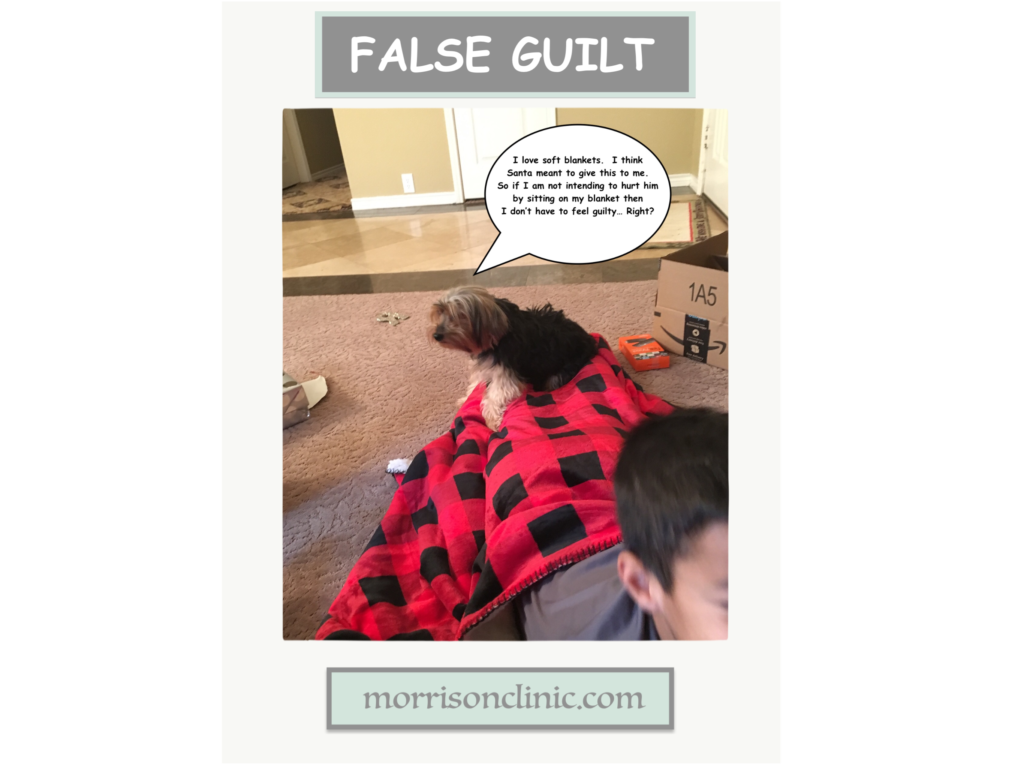
Are you plagued by feelings of guilt? Does your stomach churn when someone is upset with you? Do you seek excessive reassurance from others? Do you avoid conflict whenever possible? When conflict is unavoidable do you find yourself consumed by distress until a resolution has been found? If you answered yes to any of these questions then you maybe suffering from false guilt.
False Guilt
False guilt is pretty self explanatory. It happens when you feel inappropriate guilt and typically occurs in people who were shamed in their past. Not everyone reacts the same way to being shamed. However people who suffer from false guilt tend to be people pleasers who do not cope well when other people are upset with them . By pleasing the person who shamed them, People Pleasers found a path of least resistance that led to less conflicts. However, this unhealthy dynamic leaves them vulnerable to excessive feelings of guilt and shame. In fact they often tend to find themselves in relationships with people who are Shamers.
Shamers
Shamers are people who manipulate others. They do this by casting their emotions and expectations onto another person or by shaming others in order to get the result they want. Shamers do not stay in relationships with emotionally healthy people for very long because their bad behavior is not tolerated. Instead Shamers tend to gravitate toward People Pleasers who avoid conflict. People Pleasers do not set good boundaries and own other people’s emotions and disappointments. As a People Pleaser they look for ways to justify other people’s actions and like a bad habit, they too easily accept bad behavior.
People Pleasers
So to all of those People Pleasers out there I have an easy rule of thumb to remember when it comes to feeling guilty. The only time you should feel guilty is when you intentionally behaved in a manner that you knew would cause either physical or emotional harm to that person.In that circumstance you should own your bad behavior’s effect on another person. You should not only apologize, but do your best to determine how you can repair the damage you caused. However on the flip side you should not feel guilty if someone is physically or emotionally harmed by your actions if you did not intend for them to suffer pain. You can express empathy for their suffering. However you do not own their feelings and you do not feel guilty for your actions.
I hope this simple rule of thumb can help you more easily determine when you should feel guilt. By being able to draw a line on when you should feel guilty, you will find it easier to keep healthy emotional boundaries. Healthy emotional boundaries will lead to less conflicts with friends, families, and co-workers. Imagine how much healthier your relationships with other people can become if you learn how to stop owning other people’s emotions. You can finally let go of the guilt and shame that plagues you. If you want to work on this more on your own you should consider taking steps to heal from the shame of your past. I would recommend working with a licensed therapist and I also highly recommend this book:
What’s Wrong With Being a People Pleaser?
By Amy Morrison PA-C and medical director of Morrison Clinic.
People pleasers feel more important and feel good about themselves through the act of taking care of others. However the people they often take care of tend to manipulate and misuse them and offer them little care in return. While People Pleasers show love and affection by taking care of others, they find it hard to set healthy boundaries. They often over extend themselves. They begin to feel resentful that no one is meeting their needs.
People Pleasers spend so much time and effort in taking care of others. Unfortunately, they often do not establish good social support for themselves. They also find it hard to give up control and let other people take care of them. While taking care of others in noble and rewarding, it can also be toxic and unhealthy. If other people are using shame and false guilt in order to get their way, then you need to consider making some changes.
Learning how to be assertive is very important in stopping the toxic cycle of giving too much and owning other people’s emotions. I recommend working with a counselor in order to best learn about healthy boundaries. You will also want to to learn assertiveness in your unique relationships. This article is a quick primer on assertiveness that I have broken down into 3 steps.
Step 1: Stop owning other people’s emotions
It is very important to recognize and understand that other people can express a wide range of emotions. They might claim that these emotions are a result of your behavior. However it is very rare that you should take any ownership of their feelings. I previously wrote an article titled“Do You Have a Guilty Conscience”. This article touches upon feelings of “false guilt” that occur when you own someone else’s negative emotions. If you haven’t read it take a quick 5 minutes to read through it. My rule of thumb about owning other people’s emotions is quite straight forward. The only time you should feel guilty is when you intentionally behaved in a manner that you knew would cause either physical or emotional harm to another person. If your actions were not intended to inflict harm then don’t defend yourself. Don’t justify your choices or decisions.
It is also important that your own emotions are not affected by other person’s reactions to your behavior. You must learn how to stay emotionally neutral with conflict. Once you have mastered this concept it will be much easier for you to set emotionally healthy boundaries.
Keep in mind this does not mean that you can act inappropriately and get away with it. When you have behaved poorly you should own it. However if your behavior was not bad and another person is upset with you then you should not justify your actions. An appropriate apology would be “I am sorry that you feel (fill in the blank), but it was not my intention to make you feel that way.” In this way you can empathize with another person’s feelings without taking ownership.
Step 2: Embrace the adage that you teach people how to treat you based on what behaviors you accept.
If you allow people to behave poorly then they will continue to behave poorly. If you do not accept bad behavior then one of 3 things will likely happen. The person will either learn to stop behaving that way, they will behave that way with other people but not with you, they will behave poorly in a different way, or they will chose to no longer interact with you. Hopefully the person learns to stop the bad behavior. However, be weary of anyone who continues to act poorly with other people or who acts out against you in a different way. These are red flags that they are not an emotionally healthy person.
Step 3: Determine what behavior, words, and actions are acceptable to you.
This of course will take some time. As you have conflicts with other people start to make notes about what behaviors are not acceptable to you. Take some time to reflect on what short phrases you could use in those circumstances. You want to be able to quickly nip the behavior in the bud with just a few words. Practice what you will say. You want to be able to deliver your responses with a pleasant look on your face and a neutral tone of voice. You can practice by looking into the mirror, role playing with another person, or even pretending that the person you want to say this to is sitting in the empty chair in front of you. Whatever method you chose it is important to practice and practice and practice some more. It is important that you feel comfortable and confident when the time comes that you need to be assertive.
Learning how to be assertive is very important skill that you should take the time to master. It will benefit you at work with co-workers, employees, and your boss, at home with your children and spouse, and socially with your friends. At first you will notice that people don’t like that you changed the rules of interaction. Be patient because you will get some push back. However it is very important to continue to be assertive. Do not become emotional and hold your ground. Consequently, you will notice a decrease in conflicts as the people in your life start to learn what behaviors you will accept. You will also find that your resentment towards others will start to dissipate. As you become more assertive, your needs will be better met and your relationships will become more fulfilling to you.
If you would like to do more work on your own then I recommend the following literature:








 I decided to pick MY favorite holiday. I did not lot the expectations of anyone else in the family influence my decision. For once I was completely selfish. I chose Christmas. It has always been my favorite holiday. The shopping, pretty wrapping paper, and smells of cinnamon tea make my heart happy. I love the color scheme, decorating the tree, and riding the Polar Express train. The city becomes alive with beautiful lights, glittery ornaments, and giant green Christmas trees. Christmas makes me feeling like a kid again. I want to believe. I cannot get enough of Elfie, our Elf on the Shelf. Scheming his crazy antics is a great way to end a long and stressful day. I’m often so proud of myself that I have to take pictures to send to my friends and family.




 Amy Morrison is a psychiatric PA and is the Medical Director of Morrison Clinic Psychiatry. She is the mother of 2 vivacious and amazing children. She enjoys writing, crafting, playing soccer, and spending time with friends and family.